 Single Payer and WHST Presented to Jefferson Healthcare Public Hospital District Board
At the 11/29/2014 Jefferson Healthcare Public Hospital Commissioner meeting the commission allowed 35 minutes to learning about single payer healthcare and specifically the Washington Health Security Trust (WHST), formerly known as HB 1085/SB 5224, a bill for single payer healthcare in Washington State. This is the first Washington State public hospital district to consider formally supporting (or opposing) single payer healthcare and or the WHST. This WHST is currently under consideration for inclusion in the 2015 Washington State legislative session.
This video includes a brief introduction by Commissioner Ready, a 10 minute presentation by guest single payer expert Dr. Ken Fabert of Physicians for a National Health Plan (PNHP), and approximately 20 minutes of public comment. The commissioners did not engage in any discussion of the issues during this session.
If the Jefferson Healthcare board votes to support this bill, this action might help convince the Wa 24th Legislative district representatives, Tharinger, Van de Wege, and Hargrove to also support the bill. Reps. Tharinger and Van de Wege sit on the House Health Care and Wellness Committee and Sen. Hargrove sits on the Senate Ways and Means Committee, making all of them highly influential regarding a bill like this.
It now appears likely the board an actual vote yes or no to support single payer and or the WHST will most likely happen at the following regular meeting of the Jefferson Healthcare Commissioners, Dec 3, 2014.
Saturday Panel on Single Payer with Representative Tharinger!
 Finally, Some Answers!
A Single-Payer Healthcare Forum, Including What Does SINGLE PAYER Mean?
Location: Quimper Unitarian Universalist Fellowship, 2333 San Juan Ave., Port Townsend, WA
When: Saturday, November 22, 12:30 – 2:30 p.m.
Sponsors: Jefferson County Citizens for Healthcare Access
League of Women Voters Clallam County
Healthcare for All – Washington
Moderator: Bertha Cooper, League of Women Voters Clallam County
Panel: Rep. Steve Tharinger, 24th Legislative District
Dr. Ken Fabert, Physicians For a National Health Plan
Matt Ready, Board Member, Jefferson Healthcare
Patrick Noonan, Healthcare For All-WA, Medical Device Consultant
Please join us for a thorough dialogue of the path to achieving single-payer healthcare in Washington State. There are many questions. We’ll discuss the following and more:
Why is our current financing of healthcare unsustainable?
Are we really spending enough money to cover everyone?
How can business, retirees, families, government employees and hospitals all benefit?
How can single-payer lower our taxes?
Why are some businesses shouldering an unfair portion of the burden?
How are other businesses making extreme profits from our current system?
Where is all the money is going and what we should do about it?
What is the bill before our legislature?
Why is our current method a threat to rural hospitals and family practitioners?
How is the U.S. lagging behind other nations in what we pay and what we receive?
How many of our citizens face the terror of not having healthcare coverage?
What organizations oppose a solution? Why would they do so?
Why do uninformed citizens oppose single-payer and how we should approach them?
How can single-payer be self-funding?
Why are we discussing this at the local and state level?
Should we call it “Medicare for All?”
What are some overlooked benefits to changing our system?
Why should this be an apolitical issue?
We’ll have statements by the panel and a full hour of Q &A.
Please attend and get involved. Bring any skeptics with you.
More information about the Washington Health Security Trust (Single Payer in WA)
Below are links to some documents that go over more detail for the Washington Health Security Trust. Please note, the bill is being revised and will have some slight changes when it is considered for the 2015 legislative session. A new bill description and analysis will also be drafted that matches the new and improved version of the bill. The full bill text linked to below is again the version from 2013. Nonetheless, these documents will provide a lot of relevant detailed information about the WHST.
- WHST-Presentation-20141106 (2)
- WHST-by-sections-HB1085-highlights (2013 version)
- WHST BILL DESCRIPTION
- HOUSE BILL 1085 ANALYSIS
- The Bill Summary from 2013
- Full Text of HB 1085 (2013 version)
Here are some highlights:
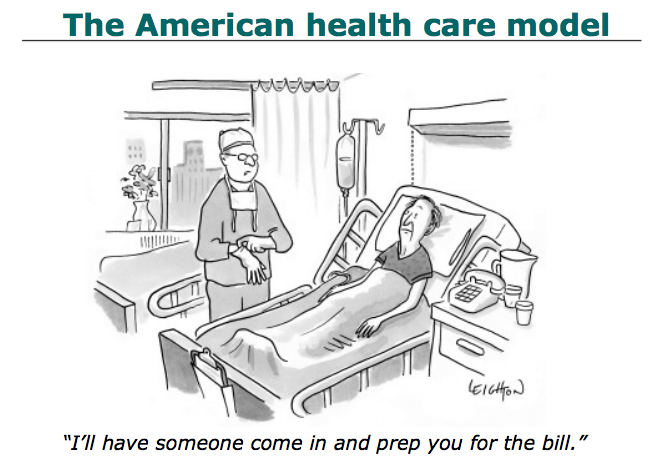
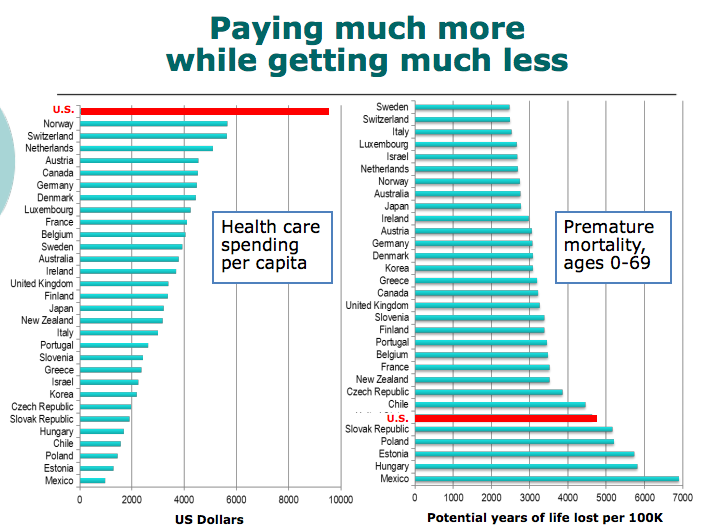
For over twenty years, government reports, economic analyses and anecdotal accounts have repeatedly shown that Washingtonians spend more than we can afford and get less heath care than we need. We spend more than $40 billion each year on health coverage and health care, yet about a million Washington residents have no health insurance at all. Many more are underinsured. Costs of coverage are rising much faster than wages, leaving workers constantly in fear of being unable to continue to afford their health insurance or its cost-sharing requirements. Medical bills, even for people with health insurance at the beginning of illness, are the leading cause of over 50% of personal bankruptcies.
The Affordable Care Act only partially deals with the issue of affordability of health insurance and health care.
Our solution – the Washington Health Security Trust (WHST)
Health Care for All – Washington (HCFA-WA) has written legislation to create a single public trust fund, the Washington Health Security Trust. The fund is dedicated to paying for a defined set of health services for all state residents.
The WHST would, essentially, collect the money we now spend on health insurance and health care from the same sources as at present (employers, individuals, state government, and the federal government), and put those funds into the Trust. The WHST can cover high quality, comprehensive health care for all residents without additional revenue.
And some details on how the WHST will be administered:
The Washington Health Security Trust (WHST) is created to provide health coverage to all Washington residents (non-residents are covered for emergency services and transportation only). The WHST is governed by a board of trustees (Board) consisting of nine members. The Governor appoints the initial members to the Board to staggered terms. After the initial round of appointments, members of the Board will be elected by congressional district. Members of the Board may have no pecuniary interest in any business subject to Board regulation and may be removed by the Governor for failing to perform or for conflict with the public interest. The Board must appoint a financial advisory committee, a citizens’ advisory committee, and a technical advisory committee.
Jefferson Healthcare Commissioners to consider Vote on Single Payer Bill for Washington State
 Exciting news. At todays Jefferson Healthcare Hospital Commissioner meeting, the entire board agreed to discuss and potentially vote on supporting or opposing the Washington Health Security Trust (formerly known as HB 1085/SB 5224), a bill for creating a single payer universal healthcare system in Washington State. This bill is currently under consideration for inclusion in the 2015 legislative session. If the Jefferson Healthcare board votes to support this bill, this action might help convince our 24th Legislative district representatives, Tharinger, Van de Wege, and Hargrove to also support the bill. Reps. Tharinger and Van de Wege sit on the House Health Care and Wellness Committee and Sen. Hargrove sits on the Senate Ways and Means Committee, making all of them highly influential regarding a bill like this.
Stay tuned for more information. Whether our district votes to support or oppose the bill, November 19 may be historic simply for the fact we may be the first public hospital district to even consider the question of supporting Single Payer at the state level at all! The commission meeting is Weds Nov 19 at 3:30pm in the Vic Dirksen Auditorium.
Update Nov 6, 2014: It now appears likely the board will use Nov 19 as an information gathering session regarding the bill for single payer. The actual vote yes or no to support the bill will most likely happen at the following regular meeting, Dec 3, 2014. This will allow the commissioners time to research and consider information from the Nov 19 session. This means if the public wishes to express opinions prior to the vote, the Nov 19 meeting is the place to do it.
More information about the Washington Health Security Trust can be found here: http://www.healthcareforallwa.org/
Update Nov 12, 2014: Below are links to some documents that go over more detail for the Washington Health Security Trust. Please note, the bill is being revised and will have some slight changes when it is considered for the 2015 legislative session. A new bill description and analysis will also be drafted that matches the new and improved version of the bill. The full bill text linked to below is again the version from 2013. Nonetheless, these documents will provide a lot of relevant detailed information about the WHST.
Hospital Commission Update
What’s Happening?
People often come up to me and ask how it’s going on the commission. My short answer: Great! My long answer: Great- but not easy. Here is a brief summary of some of the work I’ve done with my fellow commissioners (this is by no means a complete list!):
- Complete revisit and rewrite of Board Governing policies. The board has devoted many long hours to improving and clarifying the policies that define board governance and we are getting very close to a version we can publish and begin following. There are quite a number of positive changes contained in the new version- and I will give a more detailed look at these changes in a later post. For now, stay tuned! I strongly believe this work is a critical step in greatly improving our board governance.
- Community Health Needs Assessment: I believe a best practice in community health is for a thorough community health needs assessment be performed at least every 3 years. Once in office, I joined Commissioner Buhler on the team working with the Health Department, school districts, County, and more to help perform just such an assessment for Jefferson County. Much of the data can be found on the Jefferson County Public Health website. I believe a final summary report will be created that highlights the top priorities identified. (Here is a sneak peek: The number 1 priority is mental health and chemical dependency care!)
- Connecting Community Needs with the New Building Project: At the request of myself and my fellow commissioners, a detailed study and presentation was performed which evaluated the new building project in relation to impact on community health needs. You can listen to the presentation and discussion here (although you won’t be able to see the data and slides we are discussing!). This work was critical for me in evaluating the new building project.
- Community Health Improvement Work in area of Mental Health and Chemical Dependency: Even though the final Community Health Needs report is not yet published, everyone involved in the community health needs assessment felt the need to begin immediate action to work to address the growing mental health and chemical dependency challenges in our community. Collaborative work has begun involving many of the stakeholders in this area with more meetings scheduled. I am extremely excited and hopeful about positive substantive outcomes from this work!
- Audio Recordings of all public Hospital Board Meetings: A final item I am very pleased about is that at the April 16, 2014 commission meeting, the Jefferson Healthcare board unanimously voted to audio record all board meetings and publish these recordings on the hospital district website. I am extremely proud of the board for taking this enormous step in transparency for our constituents. Once in a while, the board delves into some pretty interesting topics or has interesting discussions of proposals. Now, if you are curious, you can listen to the exact dialogue of these talks.
Audio Recordings Note
As I stated above, Jefferson Healthcare is now making audio recordings of all public commission meetings! You should be able to find the recordings very soon after the meeting adjourns on the hospital district website. I will also provide links to the recordings if you follow the link “Commission Recordings” at the top of this page.
From time to time, I may include the recording in the blog on this site when I wish to highlight a specific discussion or issue from a meeting.
Hospital Commissioner Meeting 3/19/2014 (Audio Only)
During this board meeting, I presented the following 2 proposals to the board:
Proposal 1: Define Board Expectations for Collections Practices and Policies
This board has defined and often talked about what our expectations are for how this public hospital district conducts medical care, but we have not given similar clear guidance regarding our expectations of our financial services.
I think it will be helpful moving forward, if we add to our Ends goals a clear statement characterizing our expectations for how this hospital district financially impacts the lives of our patients and their families. With this in mind, I propose we add to the Boards ends policy the following:
The Jefferson Healthcare billing, charity care, and collections policies and practices will be fair, reasonable, and as compassionate as possible, within the limits of the law and available resources.
After we agree to this amendment, we can then begin discussing how to monitor the districts effectiveness in achieving it. But the first step is simply stating our end goal.
Proposal 2: Board Monitoring use of 3rd party Collections Activities
My 2nd proposal is that this hospital board immediately begin monitoring the use of 3rd party collections companies by this hospital district.
A collections monitoring report will serve to help monitor several board policy goals including those in finance, patient satisfaction, public image, community health.
I know the Jefferson Healthcare financial counselors strive to work with patients to come up with affordable solutions. But, when this does not work out-for any reason, patients may end up sent to collections on a medical debt they cannot afford- and the consequences of this are severe. These consequences include:
The patients credit getting damaged.
The patient being subjected to extraordinary collections actions – in the name of Jefferson Healthcare but without the direct oversight of Jefferson Healthcare staff.
The patients learning to view Jefferson Healthcare as an adversary rather than as a partner and steward of healthcare in our community.
The patient learning that seeking healthcare will have severely negative financial consequences- and so they stop seeking it promptly when needed- putting their future health at higher risk, and contributing to the likelihood of expensive yet preventable emergency care in the future. (Note: if the patient is unable to afford the emergency care bill, the public will end up paying for it- at a much higher cost than the cost of the initial preventative care.)
I know my fellow commissioners want Jefferson Healthcare to relentlessly strive to be a partner and steward of our communities health and by monitoring our collections activities we will gain a valuable perspective into how well we are doing towards this goal.
I recognize this hospital district has a fiduciary responsibility to act to collect debts. But I also recognize that its mission is not to maximize profits at the expense of the health of our community. Our mission is to serve as compassionate partners in the health of our community- and this means we must be particularly mindful of any actions we take that may in fact harm community members.
So, due to the significant consequences in the realms of finance, customer satisfaction, community health, and public image- that result when sending a patient account to collections, I propose we immediately begin taking steps to monitor data related to our use of these 3rd party collection services.
I recommend we begin by reviewing as soon as possible a detailed study of Jefferson Healthcare collections practices including the following data:
Trends and totals for:
Total number of open accounts currently held by 3rd party collection agencies.
Monthly # and % of patients sent to collections.
Monthly total money recovered through collections agencies.
Monthly total money written off despite use of collection agencies.
Annual trends and totals for these same items going back 5 years.
After we review the data, I will then recommend we immediately discuss setting clear goals and guidelines related to it.
I also repeated the following proposal I made at the 3/5/2014 meeting:
Publish Board Bylaws and Policies Online
Jefferson Healthcare immediately publish the most current versions of our hospital board policies and bylaws on the hospital district website for easy review by the general public.
Below is a transcript of the verbal exchange about the board policies and bylaws proposal. This was basically a discussion on whether or not we wanted to discuss the idea. There was no support for a 2nd for my motion to consider this proposal, so we did not officially consider it. (According to Roberts Rules of Order the way a board action works is 1- someone makes a motion, 2- someone seconds the motion, 3- Discussion of the motion, 4- Vote). If you wish to listen to the dialogue it is at the 01:46:30 mark! :
C. Ready: Last meeting I asked if there was interest in publishing our policies and bylaws online. There was some thought that you would like to think about it. I was wondering if there is anyone that is interested in discussing putting our board policies and bylaws online?”
C. Dressler: I think this would come again at the April…because we don’t have anything we’re going to put up at the moment because we’re going through reviews and revisions and the decision as to what form of governance. So that’s my personal take on it. So I don’t know what you…
C. Deleo: I believe I recommended at the last meeting that we wait on publishing that until we have the final out of our rewrite. I think publishing one and then a month later publishing a second one could be confusing.
C. Dressler: And do you have any comment Chuck.
C. Russel: No. I agree with Tony.
C. Ready: Personally, I think it’s…they are our current policies and I think it is reasonable to put the current policies that we’ve been operating under up. But I sense I am not going to get a second to that motion.”
Hospital Commissioner Meeting 3/5/2014
 I don’t have a full record of the March 5, 2014 commissioner meeting, but I do want to share several items I brought up to the board during the board business portion of the meeting. Please note, these are not exact quotes, but are paraphrased from my recollection and the statements I had prepared and brought with me to the board meeting.
Item 1: Board Policies and Bylaws Transparency
The first issue I raised was regarding the publication of board policies and bylaws on the hospital district website. I said something to this effect:
“I think it is important that this board operate in a transparent and open manner so that the public can best understand what we are doing and why we are doing it. With this in mind, I think we should publish our board policies and bylaws online. These documents inform virtually every action and decision this board touches upon during these commission meetings. Moreover, I know we are considering revising these documents and as such, isn’t it appropriate for the public to understand the current policies so they can appreciate our discussions of how to change them? I would like to know my fellow commissioners thoughts on this.”
The other commissioners made some remarks, but I do not have their exact words, so I do not want to attempt to paraphrase them in case I misunderstood. We did not take action on this suggestion during this meeting.
Item 2: March 21 Special Session Questions
Next, in reference to the March 21st special session I said:
“I believe the March 21st special session is largely being scheduled in response to my request for information and discussion which I stated during our board retreat and at the following board regular session. With this in mind, I wanted to make certain everyone understood clearly what questions I am hoping for us to focus upon. I am more than happy to meet with and work with the facilitator who is planning that special session to help make this happen. My questions are:
- What is the current organizational view of community health needs- which it has been using to guide major policy and decision making including the ESS building project?
- What is the current organizational priorities amongst these recognized community health needs?
- How will the new building project impact/ benefit the community? (This might be titled a “Community benefit Analysis” or “Community Health Needs Impact Analysis”)
- What will be our mechanism’s for evaluating the building project’s effectiveness regarding community benefit?
- What are the building projects measurable objectives re community benefit?”
The other commissioners made some remarks, but I do not have their exact words, so I do not want to attempt to paraphrase them in case I misunderstood.
Item 3: Community Health Needs Questions
The 3rd major issue I raised were questions about the Community Health Needs Assessment which the hospital is participating in collaboration with the Health Department. I said:
I propose we formalize in policy this organizations relationship to community health needs assessments. I think this will help us moving forward.
Questions we will benefit from asking and answering clearly include:
- Why are we participating in a community health needs assessment?
- Who is responsible/accountable for the successful completion of a community health needs assessment?
- Is the community health needs assessment important for the board to effectively govern and for JHC leadership to successfully strive to fufill the hospital districts mission?
- How often should a community health needs assessment be done?What is to be done with the community health needs assessment upon completion? Based on my research, there are 3 things that can happen after a community health needs assessment. First and most common is NOTHING. This, Dr. Locke reminded us is far too often the result. But the two very positive constructive things that can happen are a Community Health Improvement Plan, which would be done in collaboration with other community stake holders, and a community benefits report, in which the hospital would clearly state its plans to take action to positively impact the health needs of the community. Which of these choices will we make?
- Will we participate in a community health improvement plan process? If so, how often? Who will do it? How will it’s effectiveness be monitored and evaluated?
- Will we require a community benefit plan be drafted for JHC? If so, how often? Who will do it? How will it’s effectiveness be monitored and evaluated?
- Does the current JHC mission statement adequately affirm that our policies integrate and reflect the public interest in our meeting our responsibilities as a public hospital district? In other words, does our mission statement clearly state our simple responsibility to “identify and meet the healthcare needs of our community?
I have found some models used in other healthcare institutions that answer the above questions which I am considering consolidating into an amendment proposal for this board to consider.
There was no discussion following the above remarks.
Item 4: Charity Care and Collections Policies
Regarding hospital charity care and collections practices I said,
“I have some concerns that our charity care and collections policies and practices are not as fair and reasonable as they could be- and as the board might expect them to be. I met with a private citizen this past week who had done some interesting research into our collections practices and it was very thought provoking. I suspect we have some strong opportunities for improvement. I also think it is appropriate for this board to set very clear expectations about our hospital district charity care and collections policies, perhaps even if it is merely to say, “The charity care and collections policies of this hospital district will be fair, reasonable” and perhaps even “compassionate.” With this in mind, I am considering drafting an amendment to our board Ends policies regarding our charity care and collections practices and how we might monitor such expectations.”
There was no discussion following the above remark.
Next Commission Meeting: March 19, 2014
I will keep this blog updated as I continue to work with the commission towards action on the items above and more.
This Blog is About to Wake up!
It has been an exciting several months for me since my election was confirmed in November. I have been learning a lot and I continue to work very hard to understand everything I need to understand so that I can work as hospital commissioner to help make healthcare better and accessible to everyone in our community.
In addition to many hours of independent study and research, I have of course attended a large number of meetings in my new role as commissioner including both regular commission meeting sessions and otherwise. The many discussions I have engaged in have also helped me learn and evolve my thinking and approach to healthcare in our community. I have lost none of my excitement and determination to work to make things better, but I have gained far more clarity on the exact steps needed to begin to earnestly make more headway towards affordable high quality healthcare for everyone. With this in mind, I have decided to utilize this website to make clear to anyone interested what is happening and what I am focused upon in my role as hospital commissioner.
I hope you find this helpful and informative.
Election Results!
11/8/2013 update: Near final count is in. I am now ahead 402 votes and they tell me: I win! Thanks again to everyone who did anything to support me. This has been an incredible experience. I will work to make everyone proud to have me as a hospital commissioner!
11/6/2013 update: I am currently ahead 202 votes. There are probably about 2000 ballots still to arrive in the mail. The next count will happen Friday around noon. Thank you so much to everyone who supported me! I needed every single one of you to get to this point! A few more days of waiting to see perhaps a definitive result.